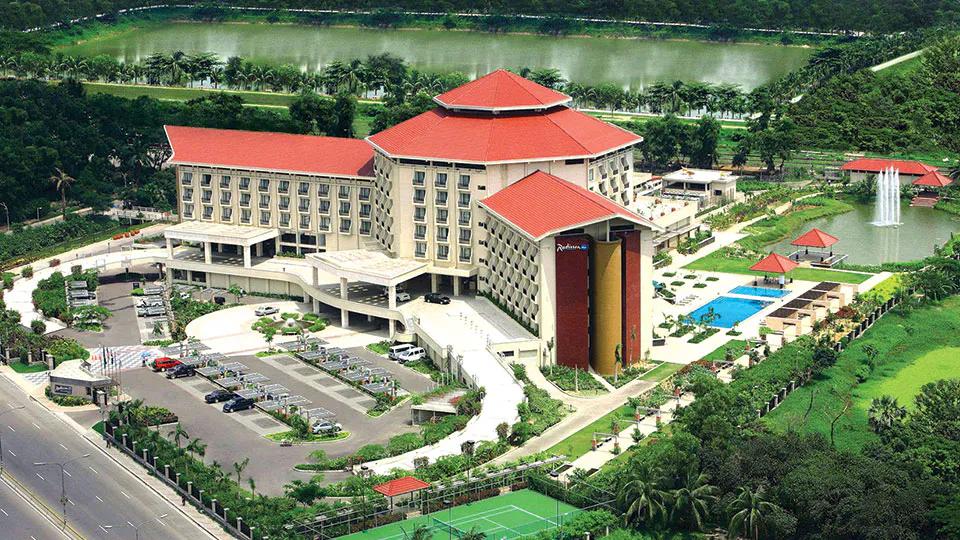
Bangladesh's hotel industry : Market still climbing global brand ladder
Dhaka : Bangladesh's hotel industry is expanding, but its structure remains uneven. For years, the country's internationally branded hospitality scene was concentrated almost entirely in the upper-upscale and luxury segment. However, Dhaka today shows early signs of a broader brand ecosystem emerging - though still far from the fully layered hotel markets seen in regional hubs like Bangkok, Singapore, or Dubai. Alongside long-established luxury properties such as InterContinental Dhaka, Pan Pacific Sonar-gaon Dhaka, The Westin Dhaka, Radisson Blu Dhaka Water Garden, and Le Meridien Dhaka, as well as the newest entrant Crowne Plaza Dhaka Airport, other international entries have begun to diversify the market. Hotels such as Amari Dhaka, Holiday Inn Dhaka City Center, Crowne Plaza Dhaka Gulshan, and the latest Hyatt Place Dhaka signal a gradual widening of global brand presence beyond the traditional luxury core. This shift is important: Bangladesh is no longer purely a "top-heavy" branded hotel market - but it is still far from a fully mature multi-tier ecosystem. Market expanding beyond luxury The arrival of brands like Holiday Inn, Crowne Plaza, and Hyatt reflects a gradual repositioning of Dhaka within global hospitality networks. Hyatt Place Dhaka introduced a globally standardized upscale offering targeting business travelers and long-stay corporate guests. Crowne Plaza Dhaka Gulshan, part of IHG, strengthened the city's premium business hotel segment in a key diplomatic and commercial zone. Holiday Inn Dhaka City Center represents a move toward more accessible international branding, closer to the upper-midscale segment. Amari Dhaka, part of Thailand's ONYX Hospitality Group, blends regional design-led hospitality with business-oriented services. These additions suggest that Bangladesh is beginning to develop a more diversified branded hotel structure, even if the scale remains limited. Still uneven brand pyramid Despite these developments, Bangladesh's hotel market still does not resemble the full "brand ladder" seen in more mature markets. In global hospitality ecosystems, major groups such as Marriott, Hilton, Accor, and IHG typically operate across four or more tiers: Luxury (Ritz-Carlton, St. Regis, Waldorf Astoria), Upper-upscale (Marriott, Sheraton, Hilton, Crowne Plaza), Midscale (Courtyard, Holiday Inn Express, Hilton Garden Inn), and Economy (ibis, Hampton by Hilton, Super 8).Hyatt Place Dhaka Uttara Bangladesh now has representation in the upper tiers and early mid-upper segment, but the lower midscale and economy-branded international categories remain largely absent. This means the market is expanding vertically - but not yet fully broadening horizontally. Missing depth : Midscale still underdeveloped Even with Holiday Inn and Crowne Plaza present, Bangladesh's midscale segment remains relatively shallow compared to regional peers. In cities like Kuala Lumpur, Bangkok, or Delhi, midscale brands form the backbone of hospitality demand, serving domestic business travelers, regional tourists, airline crew traffic, and price-sensitive international visitors. In Dhaka, however, this segment is still partially filled by local or semi-branded hotels rather than a dense network of globally standardized properties. As a result, travelers either move up to upscale international hotels or down to independent local accommodations, with fewer internationally branded mid-tier options in between. Why market is still concentrated The structure of Bangladesh's hotel industry is shaped by demand patterns and development economics. Corporate travel, diplomatic presence, and development-sector activity continue to dominate international hotel demand, supporting luxury and upscale brands. At the same time, leisure tourism remains relatively small, limiting the immediate expansion of economy-branded international hotels. Land availability and high development costs in Dhaka further push investors toward higher-ADR properties, where returns are more predictable. This combination has historically favored luxury and upper-upscale development, with midscale expansion emerging only gradually. Market in transition, not stagnation What distinguishes Bangladesh today is not absence of growth, but the stage of its evolution. The presence of Hyatt, Crowne Plaza, Holiday Inn, Amari, Westin, Sheraton, Radisson Blu, and InterContinental indicates that global hotel groups see long-term potential in the market. However, their current footprint remains concentrated in Dhaka and focused on higher-yield segments.Holiday Inn Dhaka The next phase of development will depend on whether midscale and select-service brands expand into Bangladesh in a more structured way, and whether secondary cities begin to absorb branded hospitality investment. Road ahead: Completing brand ecosystem Globally, hotel markets mature when they develop full brand ecosystems rather than isolated flagship properties. This means not only luxury hotels in capital cities, but also midscale and economy brands distributed across business districts, airports, and secondary cities. For Bangladesh, the trajectory is now clear but incomplete. The country has moved beyond a single-tier luxury market, but has not yet achieved the density of brands that define mature hospitality economies. The presence of multiple international chains in Dhaka marks an important shift. The challenge ahead is whether that presence expands downward and outward - into a fully developed, multi-layered hospitality landscape.